Project Overview
I originally completed this assignment in 2022, and am now revisiting it in 2025 to refine the design and strengthen the overall solution. This case study is a work in progress.
I developed a set of core research questions designed to clarify the specific insights I aimed to uncover, enabling a more focused and purpose-driven research process.
Research Questions:
.png)
Based on these research questions, I selected interviews as the most effective method for my research. Interviews allow for a deeper exploration of the why behind participants’ feelings and behaviours compared to surveys or observational methods, providing rich, nuanced insights that other methods may not capture.
Below is the interview script I created to answer my research questions. Questions were kept open-ended and neutral to avoid leading participants' responses, ensuring that I'm getting as close as possible to the truth. This script provided a semi-structured interview approach, allowing for insights I may not have anticipated.
Interview Questions:
.png)

I interviewed 12 students, all of whom were screened to ensure they had first-hand experience with the transition to online education during the Covid pandemic. Participants were selected from diverse academic backgrounds – Design, Computer Science, Marketing, Politics, and Communications – so that the findings reflect a broad range of experiences and perspectives.
I conducted a thematic analysis of the interview data to identify patterns in students’ behaviours, pain points, needs, and goals. Through several rounds of refinement, I deepened my understanding of the emerging trends.
Affinity Maps of Interview Data:
.png)
Interview Highlights:
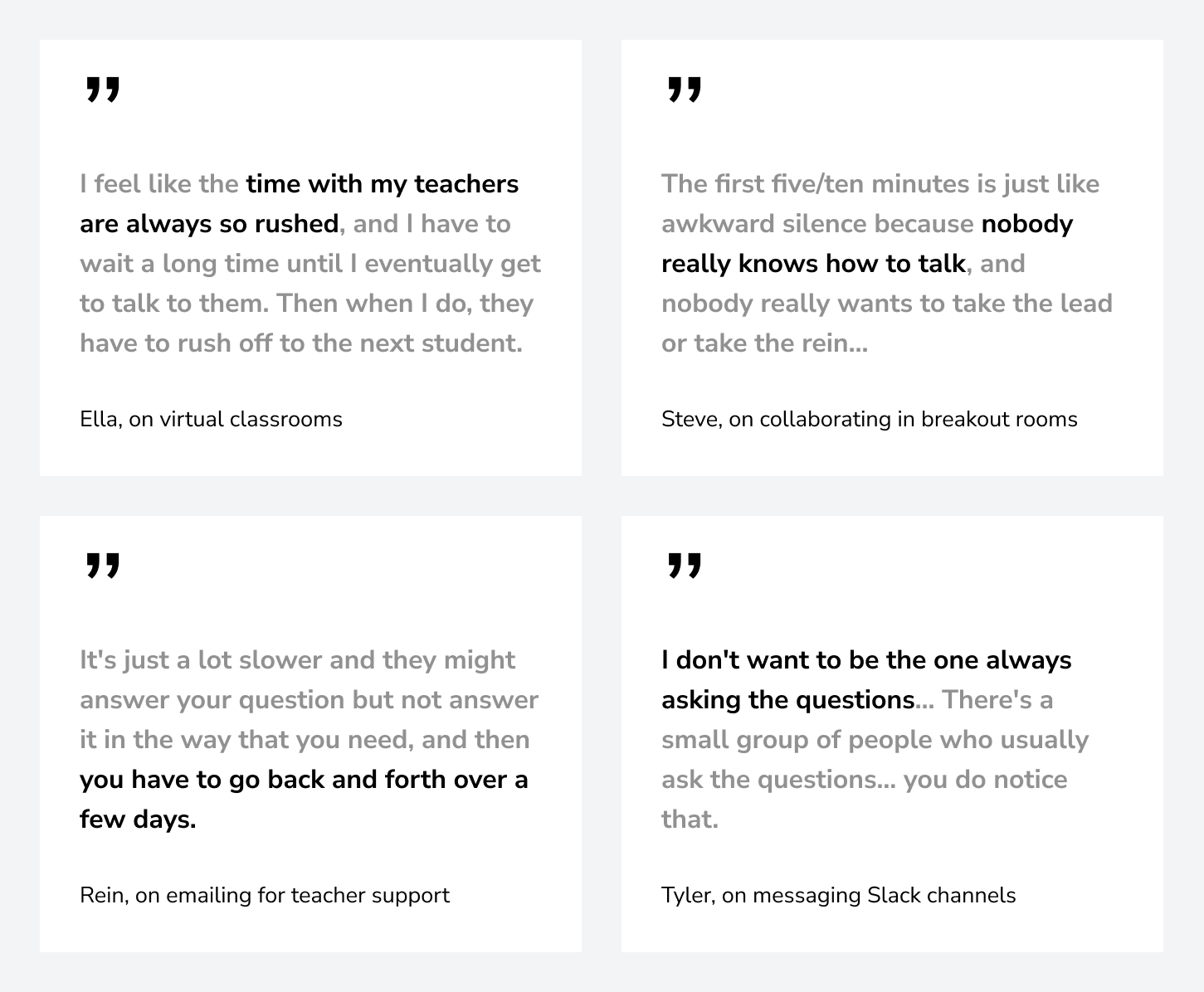
1. Virtual classroom environments limit opportunities for natural and spontaneous interaction among students and teachers.
Students reported that online learning environments offered fewer opportunities for one-on-one or informal interactions with teachers and peers. The virtual classroom format, often involving large groups, made it difficult for students to contribute or ask questions in a way that felt natural. Many described hesitation to speak up, noting that raising a hand or unmuting in a virtual setting felt more conspicuous and awkward than doing so in person. Breakout rooms, while intended to encourage discussion, were often described as uncomfortable and unproductive. As a result, overall interactivity decreased during classes.
2. Additional communication pathways outside the virtual classroom aren't working as intended.
Outside of the virtual classroom, students were encouraged to use additional communication pathways such as teacher open hours, email, Slack channels, and Blackboard discussion spaces.
These channels often fell short of their purpose. Teacher open hours were helpful but not frequent enough to provide support when students needed it most, and sometimes clashed with other classes or commitments. Many students hesitated to post on Slack or Blackboard for fear of being judged for asking a “dumb” question, or revealing last-minute work. Email communication with teachers, while available, also varied in effectiveness, with slow response times and frequent misunderstandings due to missing context.
3. Because of limited or ineffective channels for interaction, students often struggle to bridge knowledge gaps.
Students who hesitate to ask questions often struggle to bridge knowledge gaps. They shared that missing these clarifications early makes it harder to grasp more advanced material later, leaving them feeling unsure and less confident. This reinforces their reluctance to speak up, creating a cycle where gaps persist and studying becomes more stressful. Many students felt they performed better when studying in person, in part because they could easily ask questions and receive immediate feedback.
Students need a communication pathway that encourages dialogue without pressure or shame, so they can comfortably ask questions, build connections with peers, and gain the clarity they need to succeed in their learning.
I distilled the common behaviours, needs, and pain points into a representative persona, empathy map, and journey map. These tools will guide the next phase, supporting ideation and ensuring the design of the solution remains grounded in the users’ real experiences.
.png)
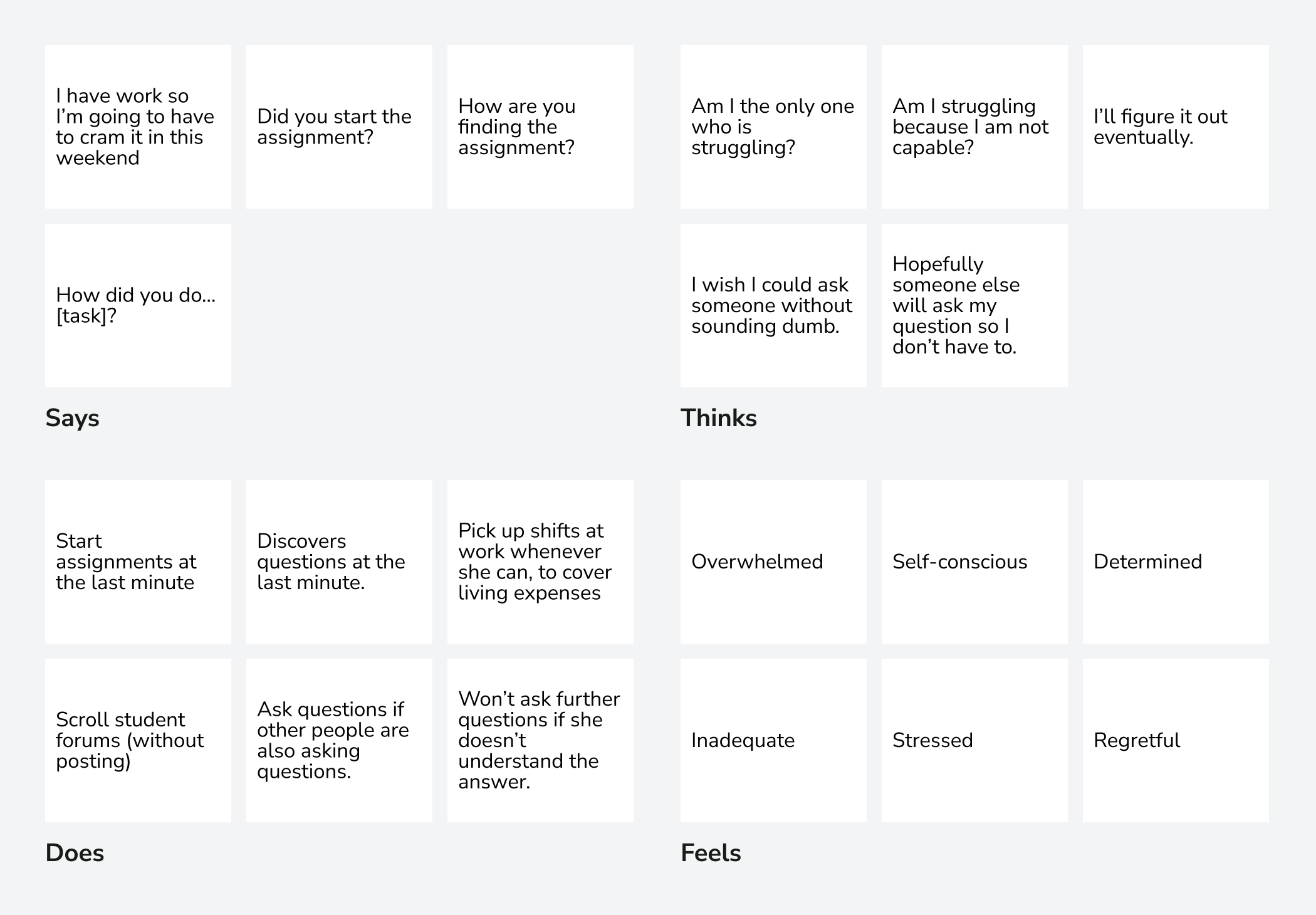

Encourage dialogue between students by removing pressure and shame so they can comfortably ask questions, build connections with peers, and gain the clarity they need to succeed in their learning.
I used the Crazy 8’s sketching method to rapidly generate ideas, ensuring each concept was grounded in insights from the persona, empathy map, and journey map.
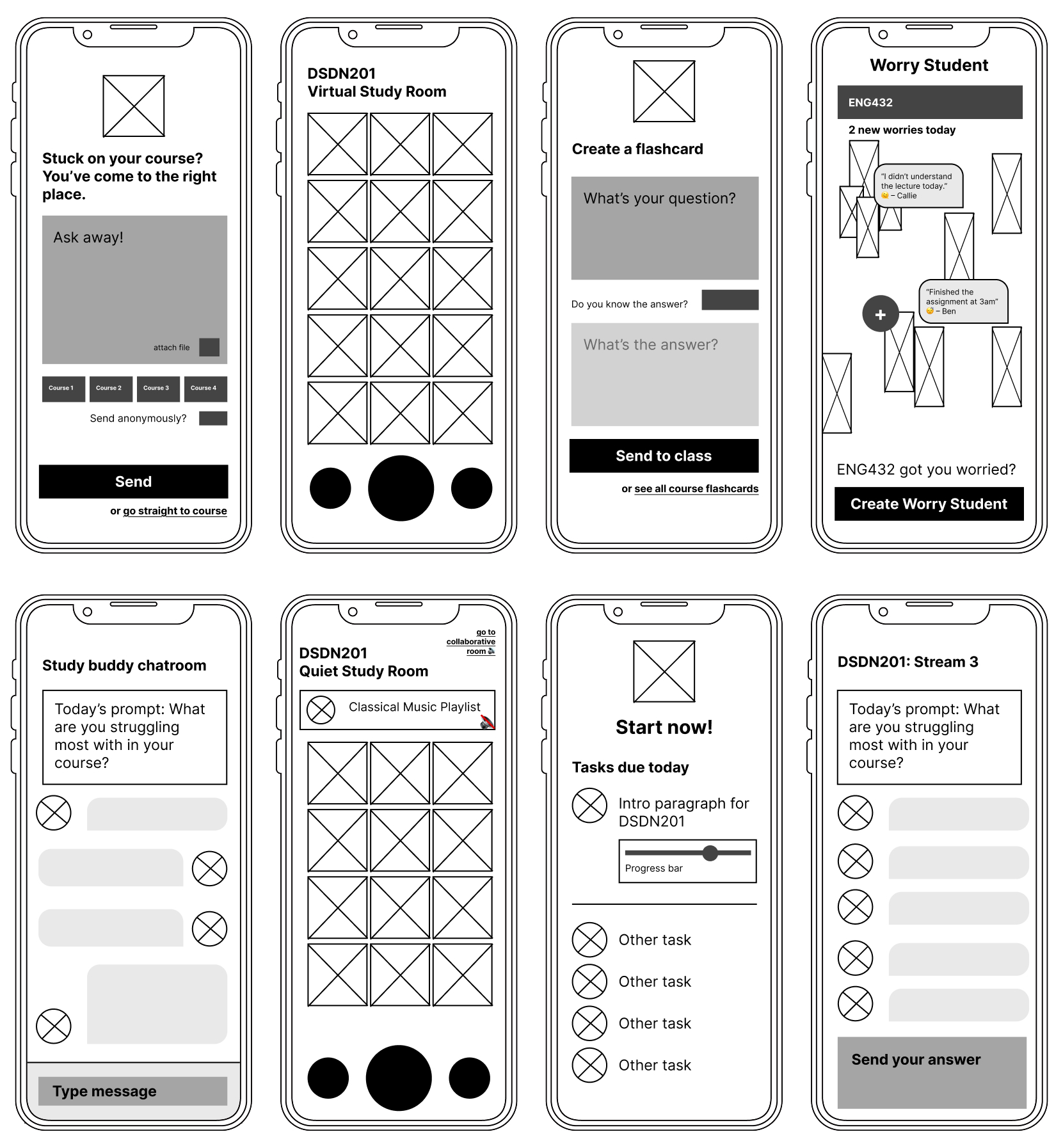
The first idea emerged as the most promising, offering a straightforward approach that best supported the persona’s experience.
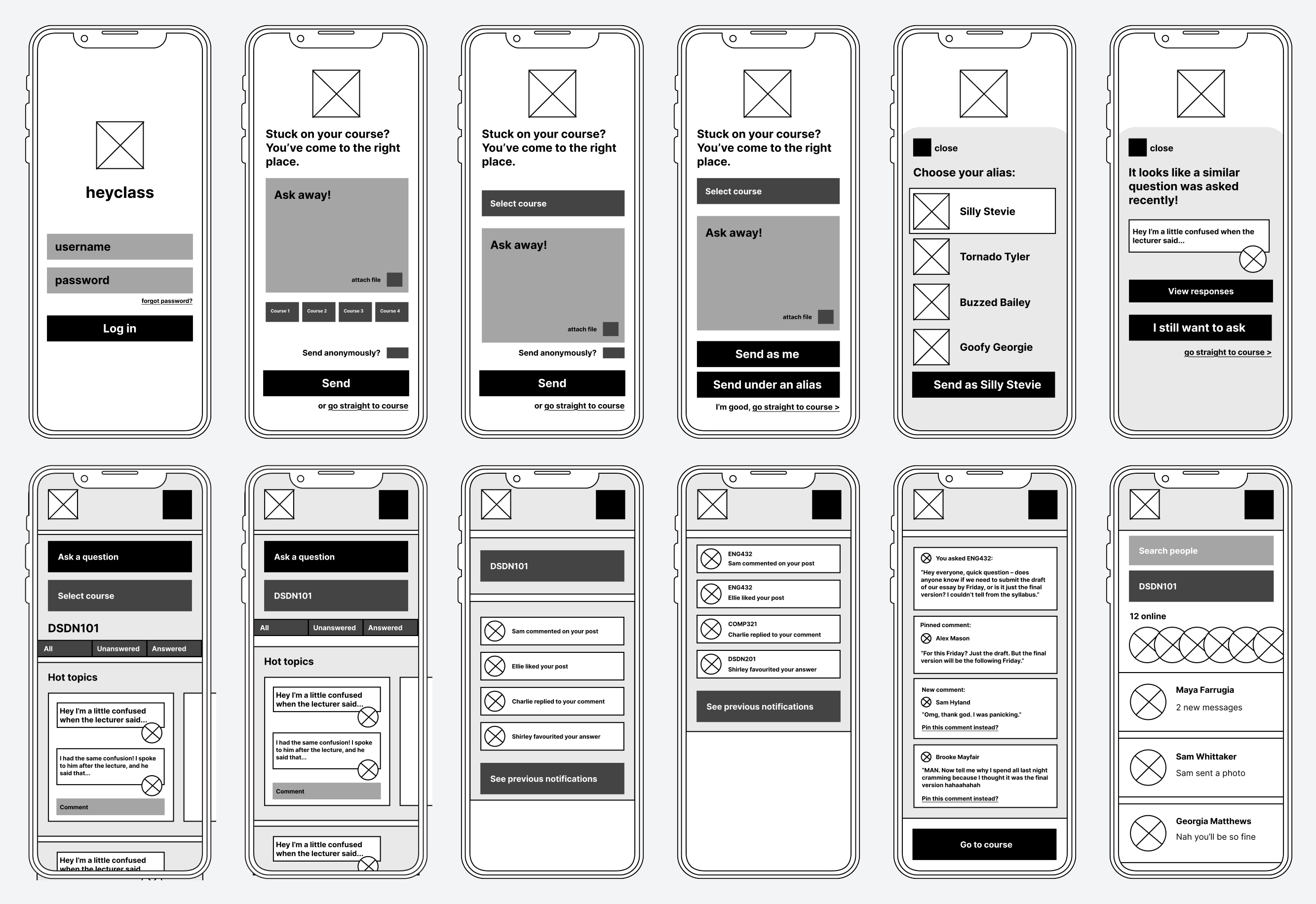
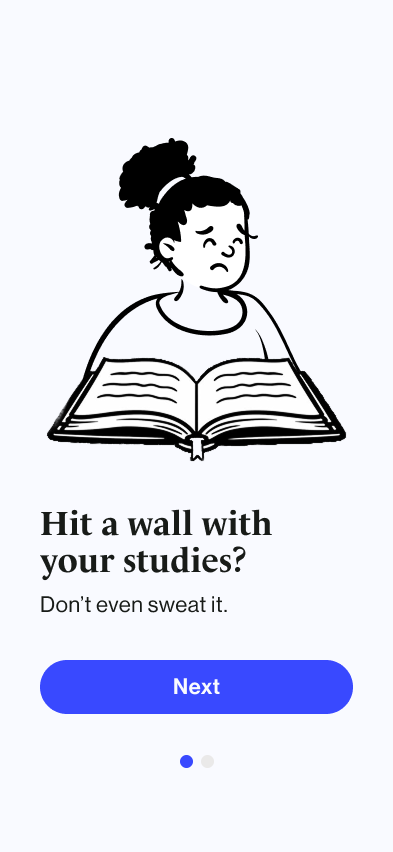
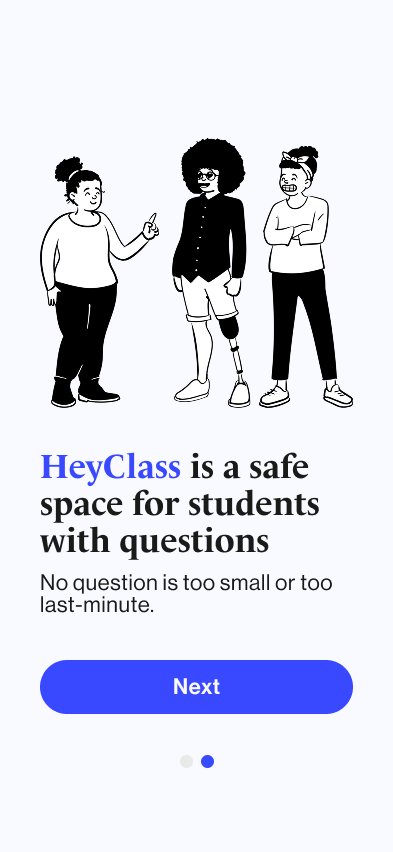
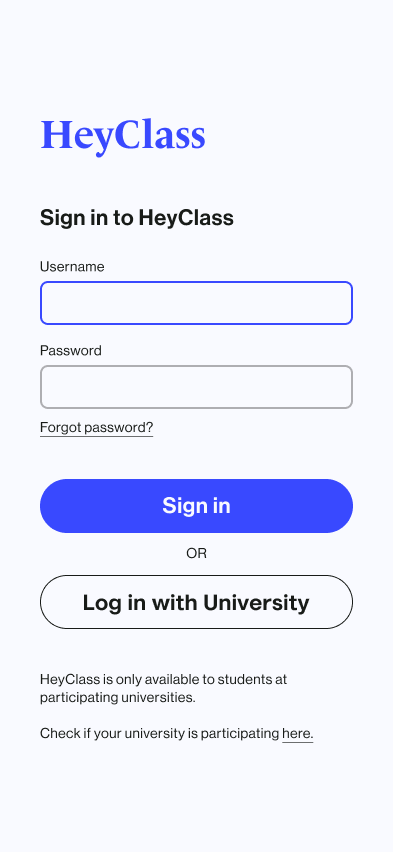
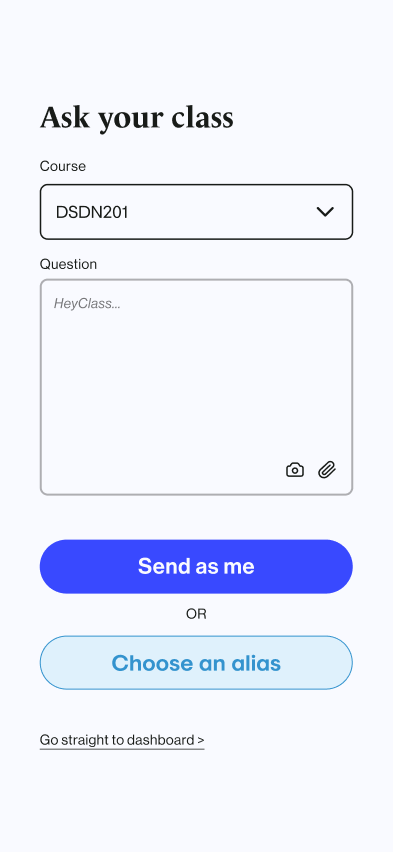
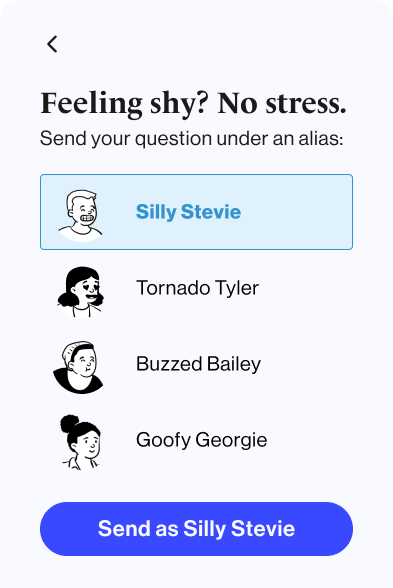
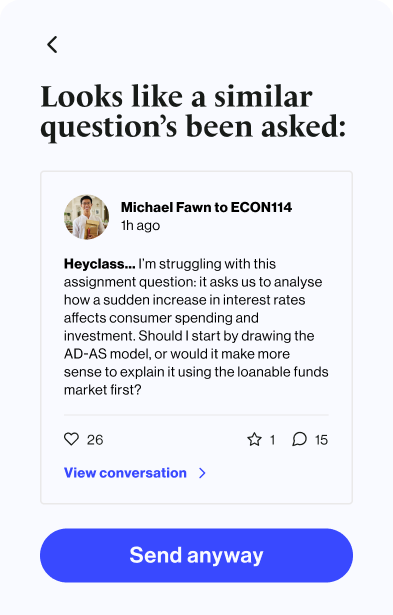
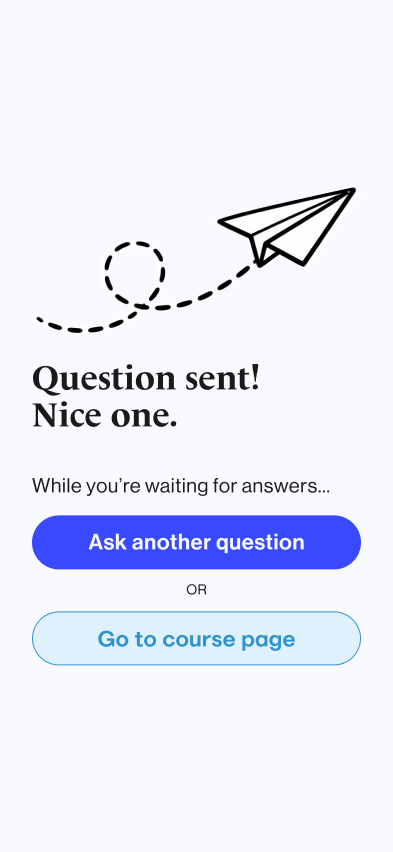
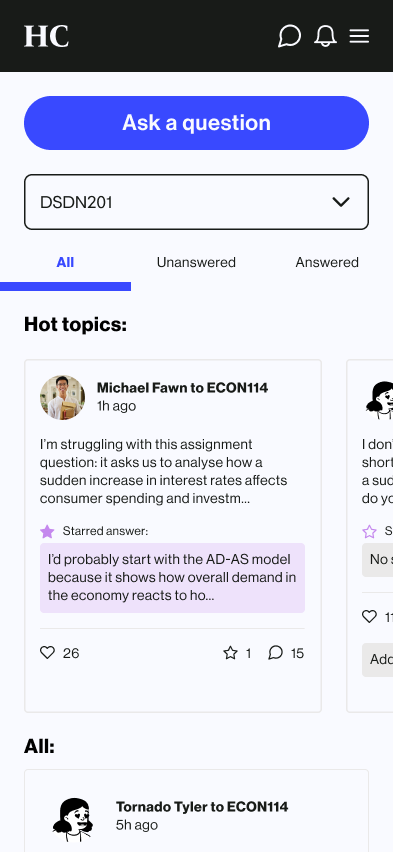
Heyclass is a platform designed to reduce the pressure and stigma around asking questions. It encourages question-asking from the moment users enter the platform, and allows the self-conscious student to ask questions using a playful alias.
Wireframes:

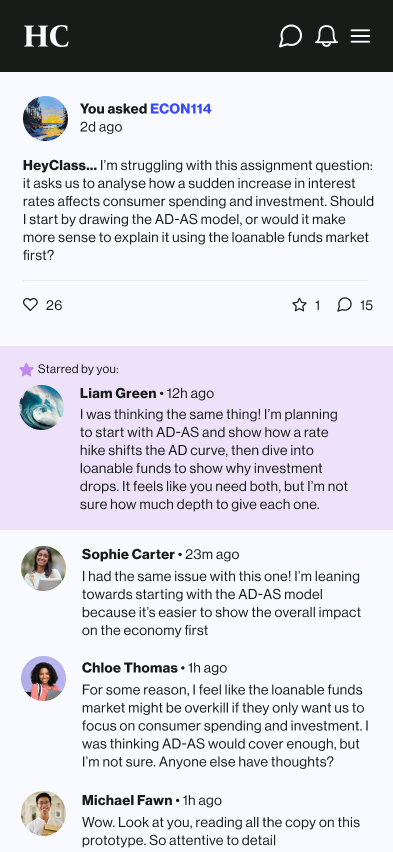
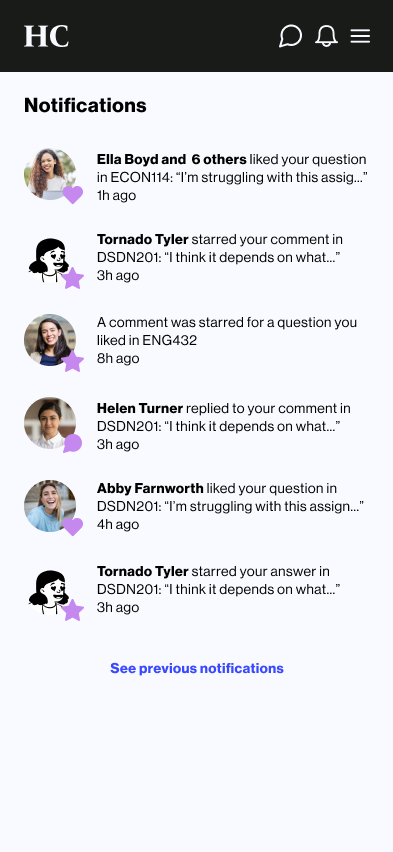
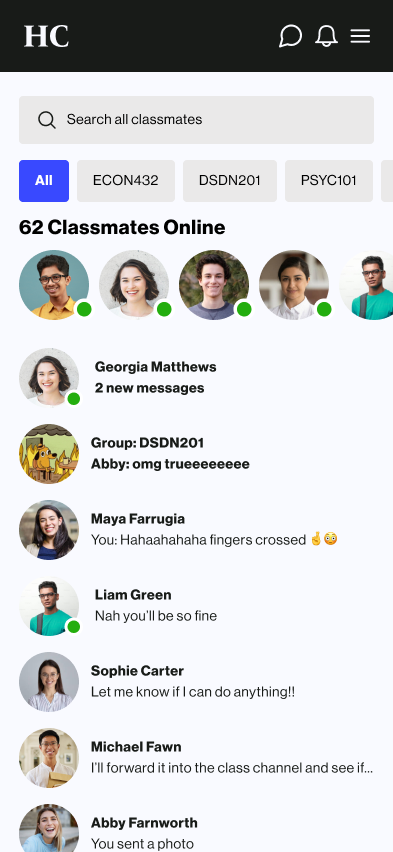
The next step is to conduct moderated think-aloud usability testing with a small group of representative users. Participants will be asked to complete key tasks while verbalising their thoughts, allowing me to observe their decision-making and identify points of friction in real time. This method will help validate whether the interface feels intuitive, highlight areas of confusion, and inform refinements to improve clarity and flow.